Kerala Syllabus 9th Standard Hindi Solutions Unit 3 Chapter 3 अंदर के और बाहर के

You can Download अंदर के और बाहर के Questions and Answers, Summary, Activity, Notes, Kerala Syllabus 9th Standard Hindi Solutions Unit 3 Chapter 3 help you to revise complete Syllabus and score more marks in your examinations.

Kerala State Syllabus 9th Standard Hindi Solutions Unit 3 Chapter 3 अंदर के और बाहर के (व्यंग्य लेख)

अंदर के और बाहर के Summary in Malayalam and Translation

Hss Live Guru 9th Hindi Kerala Syllabus
Kerala Syllabus 9th Standard Hindi Solutions Unit 1 Chapter 3
9th Standard Hindi Notes 2021 Kerala Syllabus


अंदर के और बाहर के शब्दार्थ

Kerala Syllabus 9th Standard Hindi Notes
9th Class Hindi Notes Chapter 3 Kerala Syllabus

Kerala Padavali Malayalam Standard 9 Solutions Unit 5 Chapter 2 Thenvarikka

Students can Download Kerala Padavali Unit 5 Chapter 2 Thenvarikka Questions and Answers, Summary, Notes Pdf, Activity, Kerala Padavali Malayalam Standard 9 Solutions helps you to revise the complete Kerala State Syllabus and score more marks in your examinations.

Kerala Padavali Malayalam Standard 9 Guide Unit 5 Chapter 2 Thenvarikka

Thenvarikka Questions and Answers, Summary, Notes

Kerala Padavali Malayalam Standard 9 Solutions Unit 5 Chapter 2 Thenvarikka 1

9th Class Malayalam Kerala Padavali Notes
9th Class Malayalam Kerala Padavali Questions And Answers

Vakyathil Prayogikkuka 9th Standard Kerala Padavali Malayalam
Kerala Padavali Class 9 Solutions

Class 9 Kerala Padavali Malayalam Standard 9 Notes
Class 5 Malayalam Kerala Padavali Notes
Class 5 Malayalam Kerala Padavali Question Answer
Class 5 Malayalam Kerala Padavali Notes Pdf

Kerala Padavali Malayalam Standard 6 Solutions
Kerala Padavali Malayalam Standard 9 Solutions Unit 5 Chapter 2 Thenvarikka 11
Kerala Padavali Malayalam Standard 9 Solutions Unit 5 Chapter 2 Thenvarikka 12
Kerala Padavali Malayalam Standard 9 Solutions Unit 5 Chapter 2 Thenvarikka 13

Kerala Padavali Malayalam Standard 9 Solutions Unit 5 Chapter 2 Thenvarikka 14
Kerala Padavali Malayalam Standard 9 Solutions Unit 5 Chapter 2 Thenvarikka 15
Kerala Padavali Malayalam Standard 9 Solutions Unit 5 Chapter 2 Thenvarikka 16

Kerala Padavali Malayalam Standard 9 Solutions Unit 5 Chapter 2 Thenvarikka 17
Kerala Padavali Malayalam Standard 9 Solutions Unit 5 Chapter 2 Thenvarikka 18
Kerala Padavali Malayalam Standard 9 Solutions Unit 5 Chapter 2 Thenvarikka 19
Kerala Padavali Malayalam Standard 9 Solutions Unit 5 Chapter 2 Thenvarikka 20

Kerala Padavali Malayalam Standard 9 Solutions Unit 5 Chapter 2 Thenvarikka 21
Kerala Padavali Malayalam Standard 9 Solutions Unit 5 Chapter 2 Thenvarikka 22
Kerala Padavali Malayalam Standard 9 Solutions Unit 5 Chapter 2 Thenvarikka 23

Kerala Padavali Malayalam Standard 9 Solutions Unit 5 Chapter 2 Thenvarikka 24

Kerala Syllabus 9th Standard Biology Solutions Chapter 1 Protectors of Biosphere in Malayalam

Students can Download Biology Part 1 Chapter 1 Protectors of Biosphere Questions and Answers, Summary, Notes Pdf, Activity in Malayalam Medium, Kerala Syllabus 9th Standard Biology Solutions helps you to revise the complete Kerala State Syllabus and score more marks in your examinations.

Kerala State Syllabus 9th Standard Biology Solutions Chapter 1 Protectors of Biosphere in Malayalam Medium

Protectors of Biosphere Textual Questions and Answers in Malayalam

Kerala Syllabus 9th Standard Biology Notes Malayalam Medium Chapter 1

Kerala Syllabus 9th Standard Biology Notes Malayalam Medium
Kerala Syllabus 9th Standard Biology Notes Pdf

Kerala Syllabus 9th Standard Biology Notes
9th Standard Biology Notes Malayalam Medium

Biology Notes For Class 9 Kerala Syllabus
9th Class Biology Notes Kerala Syllabus
Kerala Syllabus 9th Standard Biology Notes English Medium

9th Biology Notes Kerala Syllabus
9th Class Biology Notes Malayalam Medium
Protectors Of Biosphere Class 9 Notes

Kerala Syllabus 9th Standard Biology Notes Chapter 1
9th Std Biology Notes Kerala Syllabus
Kerala Syllabus 9th Standard Biology Solutions Chapter 1 Protectors of Biosphere in Malayalam 14

Kerala Syllabus 9th Standard Biology Solutions Chapter 1 Protectors of Biosphere in Malayalam 15

Kerala Syllabus 9th Standard Biology Solutions Chapter 1 Protectors of Biosphere in Malayalam 16
Kerala Syllabus 9th Standard Biology Solutions Chapter 1 Protectors of Biosphere in Malayalam 17
Kerala Syllabus 9th Standard Biology Solutions Chapter 1 Protectors of Biosphere in Malayalam 18

Kerala Syllabus 9th Standard Biology Solutions Chapter 1 Protectors of Biosphere in Malayalam 19
Kerala Syllabus 9th Standard Biology Solutions Chapter 1 Protectors of Biosphere in Malayalam 20
Kerala Syllabus 9th Standard Biology Solutions Chapter 1 Protectors of Biosphere in Malayalam 21

Kerala Syllabus 9th Standard Biology Solutions Chapter 1 Protectors of Biosphere in Malayalam 22
Kerala Syllabus 9th Standard Biology Solutions Chapter 1 Protectors of Biosphere in Malayalam 23

Adisthana Padavali Malayalam Standard 9 Solutions Unit 3 Chapter 3 Kaviyum Samuhajivi

Students can Download Adisthana Padavali Unit 3 Chapter 3 Kaviyum Samuhajivi Questions and Answers, Summary, Notes Pdf, Activity, Adisthana Padavali Malayalam Standard 9 Solutions helps you to revise the complete Kerala State Syllabus and score more marks in your examinations.

Adisthana Padavali Malayalam Standard 9 Guide Unit 3 Chapter 3 Kaviyum Samuhajivi

Kaviyum Samuhajivi Questions and Answers, Summary, Notes

Kaviyum Samooha Jeevi Summary 9th Malayalam

9th Class Malayalam Adisthana Padavali Notes
9th Class Adisthana Padavali Notes Malayalam
Malayalam Adisthana Padavali Class 9 Textbook Pdf

Hss Live Guru 9th Malayalam
Adisthana Padavali Malayalam Standard 9 Solutions
Adisthana Padavali Class 9 Solutions Malayalam

9th Class Malayalam Kerala Padavali Notes
Kerala Syllabus 9th Standard Malayalam Guide
Malayalam Adisthana Padavali Class 9

Kerala Syllabus 8th Standard Hindi Solutions Unit 3 Chapter 2 बात उस मंगलवार की

You can Download बात उस मंगलवार की Questions and Answers, Summary, Activity, Notes, Kerala Syllabus 8th Standard Hindi Solutions Unit 3 Chapter 2 help you to revise complete Syllabus and score more marks in your examinations.

Kerala State Syllabus 8th Standard Hindi Solutions Unit 3 Chapter 2 बात उस मंगलवार की (डायरी)

बात उस मंगलवार की पाठ्यपुस्तक के प्रश्न और उत्तर

Bath Us Mangalvar Ki Kerala Syllabus 8th प्रश्ना 1.
मेहनत की कमाई का भोजन स्वदिष्ठ क्यों हो जाता है?
8th Standard Hindi Notes State Syllabus
उत्तर:
श्रम के कारण भूख लगती है। भूख मिटाने के लिए जब खाना खाते हैं, वह अधिक स्वादिष्ठ होता है। बेकार में बैठकर खानेवाले को इसी प्रकार की अनुभूति नहीं होती।

बात उस मंगलवार की Notes Kerala Syllabus 8th प्रश्ना 2.
मरीज़ गैर ज़रूरी इंजेक्शन चाहते हैं। क्यों?
Kerala Syllabus 8th Standard Hindi Textbook
उत्तर:
बीमारी और इलाज़ के संबंध में बहुत गलतफहमियाँ हैं। आम जनता चाहती है कि इंजेक्शन से बीमारी जल्दी से दूर होती है। यह विचार चिकित्सा के संबंध में उनकी अज्ञता के कारण है।

Bath Use Mangalwar Ki Kerala Syllabus 8th प्रश्ना 3.
“यहीं जंगल के बीच ये सभी मेरे क्लीनिक हैं।” -इससे आपने क्या समझा?
Class 8 Hindi Notes Kerala Syllabus
उत्तर:
यहाँ डॉक्टर का मनोभाव प्रकट होता है। यह डॉक्टर चिकित्सा को व्यापार नहीं . मानती है। वे इसे सेवाकार्य मानती है। इसलिए शहर में उनकी अपनी क्लीनिक नहीं है। जंगल के अनपढ़, अशिक्षित, गरीब ही उनके मरीज़ हैं। वे उनके लिए काम – करती हैं।

बात उस मंगलवार की Textbook Activities

Kerala Syllabus 8th Standard Notes Hindi प्रश्ना 1.
डॉ रमणी अटकुरी की चरित्रगत विशेषताएँ लिखें।
Hss Live Guru 8th Hindi Kerala Syllabus
उत्तर:
रमणी अटकुरी एक ईमानदार डॉक्टर हैं। वे डॉक्टरी को व्यापार मानती नहीं। उनके अनुसार डॉक्टर को समाज की सेवा करनी चाहिए। इस आदर्श को वे अपने जीवन में निभाती है। वह एक आदर्श डॉक्टर हैं।

Hsslive Guru 8th Class Hindi Kerala Syllabus प्रश्ना 2.
आपके दृष्टिकोण में एक डॉक्टर के गुण क्या-क्या हैं? टिप्पणी लिखें।
8th Standard Hindi Guide Kerala Syllabus
उत्तर:
मेरी राय में डॉक्टर को ईमानदार होना चाहिए। अपने पेशे को धन कमाने का उपाय न मानना चाहिए। मरीज़ों के पास जाकर उनकी सेवा-सुश्रूषा करनी चाहिए। मरीज़ों के साथ सहानुभूति पूर्ण व्यवहार अपनाना चाहिए। अपने उत्तरदायित्व को निभाते हुए समाज के लोगों को स्वस्थ रखने के कामों में भाग लेना चाहिए।

Bath Us Mangalvar Ki Question Answer Kerala Syllabus 8th प्रश्ना 3.
संवाद लिखें।
Kerala Syllabus 8th Standard Hindi Solutions Unit 3 Chapter 2 बात उस मंगलवार की 13
8th Std Hindi Notes Kerala Syllabus
उत्तर:
Kerala Syllabus 8th Standard Hindi Notes

Hss Live Guru 8 Hindi Kerala Syllabus प्रश्ना 4.
संवाद लिखें।
Kerala Syllabus 8th Standard Hindi Solutions Unit 3 Chapter 2 बात उस मंगलवार की 15
उत्तर:
Hindi Class 8 Kerala Syllabus
8std Hindi Notes Kerala Syllabus

बात उस मंगलवार की Summary in Malayalam and Translation

8 Std Hindi Textbook Kerala Syllabus
Bath Us Mangalvar Ki Kerala Syllabus 8th

बात उस मंगलवार की शब्दार्थ Word meanings

बात उस मंगलवार की Notes Kerala Syllabus 8th

Kerala Syllabus 8th Standard Maths Solutions Chapter 3 Polygons

You can Download Polygons Questions and Answers, Activity, Notes, Kerala Syllabus 8th Standard Maths Solutions Chapter 3 help you to revise complete Syllabus and score more marks in your examinations.

Kerala State Syllabus 8th Standard Maths Solutions Chapter 3 Polygons

Polygons Text Book Questions and Answers

Textbook Page No. 49

Class 8 Maths Polygon Kerala Syllabus Question 1.
Find the sum of angles of a polygon with 52 sides?
Solution:
Sum of angles = (52 – 2) 180
= 50 × 180
= 9000

Hsslive Guru 8th Class Maths Kerala Syllabus Question 2.
The sum of angles of a polygon is 8100°. Find the number of its sides?
Solution:
Let sides = n
∴ Sum of angles = 8100
(n – 2) 180 = 8100
n – 2 = \(\frac{8100}{180}\)
= 45
n = 47, Number sides of the polygon = 47

Hss Live Maths 8th Standard Kerala Syllabus Question 3.
Can 1600 be the sum of angles of a polygon. Can 900° be the sum?
Solution:
1600 is not the multiple of 180°. So it cannot be the sum of the angles. 900° is the multiple of 180. So 900° can be the sum of angles of a polygon.

Polygons Chapter For Class 8 Kerala Syllabus  Question 4.
All the angles of a polygon with 20 sides are equal. Find the measure of each angle?
Solution:
Sum of angles of a polygon with 20 sides. = (20 – 2) × 180
= 18 × 180
Each angle = \(\frac{18 \times 180}{20}\) = 162°

Hss Live Guru 8th Maths Kerala Syllabus Question 5.
The sum of angles in a polygon is 1980. Find the sum of angles of the polygon with one side more. Find the sum with one side less?
Solution:
When one side of a polygon increases, the sum of angle increases by 180°.
∴ Sum of angles = 1980 + 180 = 2160°
When the number of sides decreases by 1, the sum of angles also decreases by 180°.
∴ Sum of angles = 1980 – 180 = 1800°

Textbook Page No. 51

Polygon Chapter Class 8 Kerala Syllabus Question 1.
Two angles of a triangle are 40°, 60° each. Find the measure of the exterior angles?
Solution:
Third angle = 180 – (40 + 60) = 80°
Exterior angles = 180 – 40, 180 – 60,
180 – 80, 140,
ie, 140°, 120° and 100°

Class 8 Polygon Chapter Kerala Syllabus Question 2.
Find all the angles in the figure.
Class 8 Maths Polygon Kerala Syllabus
Solution:
∠ABC = 180 – 105 = 75°
∠C = 180 – (35 + 75)
= 180° – 110° = 70°
Exterior angle at A = 180° – 35° = 145°
Exterior angle at B = 180° – 75° = 105°
Exterior angle at C = 180° – 70°
= 110°
Hsslive Guru 8th Class Maths Kerala Syllabus

Hsslive Maths Class 8 Kerala Syllabus Question 3.
Find all the exterior angles of the quadrilateral in the figure.
Hss Live Maths 8th Standard Kerala Syllabus
Solution:
4th angle = 360 – (130 + 70 + 60) = 100°
Exterior angles = 120°, 110°, 50°, 8o°

8th Class Maths Notes Kerala Syllabus Question 4.
Find all the angles of the given diagrams
Polygons Chapter For Class 8 Kerala Syllabus
Solution:
(i)
Hss Live Guru 8th Maths Kerala Syllabus
Angles of the triangle are 70°, 35°, 75°
Exterior angles are 35°, 110°, 105°

(ii)
Polygon Chapter Class 8 Kerala Syllabus
Angles of the quadrilateral are
∠C = 85°, ∠B = 85°, ∠A = 100°, ∠D = 90°
Exterior angles are 95°, 80°, 90°, 95°
All angles at D are 90°
Angles at C are 85°, 95°, 85°, 95°

(iii)
Class 8 Polygon Chapter Kerala Syllabus
Angles of the quadrilateral are :
∠ A = 65°, ∠B = 75s°, ∠C = 100°, ∠D = 120°
Exterior angles are 115°, 105°, 80°, 60°
Angles at C are 100°, 80°, 100°, 80°

Hss Live Guru 8 Maths Kerala Syllabus  Question 5.
Prove that in a triangle, the exterior angle at a vertex is the sum of interior angles at the other two vertices
Solution:
Hsslive Maths Class 8 Kerala Syllabus
∠DBC + ∠ABC = 180° (linear pair)
∠A + ∠C + ∠ABC = 180° (Angles of a triangle)
∴ ∠A + ∠C = ∠DBC
So in a triangle the exterior angle at a vertex is the sum of interior angles at the other two vertices.

Textbook Page No. 54

Hsslive Guru 8th Maths Kerala Syllabus Question 1.
All the angles of an eighteen sided polygon are equal. Find each exterior and interior angles?
Solution:
The angles of the polygon are equal. So the exterior angles are also equal. Sum of the exterior angles = 360°
Measurement of an interior angle = \(\frac{360}{18}\) = 20°

Hsslive Guru 8 Maths Kerala Syllabus Question 2.
The sides PQ and RS of the quadrilateral PQRS are parallel. Find all the exterior and interior angles of the quadrilateral.
Solution:
8th Class Maths Notes Kerala Syllabus
PQ and RS are parallel to each other ∠P = 500, The exterior angle at S = 500
∴ ∠S = 130°
∠Q = 360 – (50 + 130 + 110)
= 360 – 290 = 70°
The angles of the quadilateral are ∠P = 50°, ∠Q = 70°, ∠R = 110°, and ∠S = 130°
The exterior angles are 130°, 110°, 70°, 50°

Hss Live Guru Class 8 Maths Kerala Syllabus Question 3.
Hss Live Guru 8 Maths Kerala Syllabus
Draw a quadrilateral and mark the exterior angles at two vertices. Is there any relationship between the sum of these angles and the sum of the interior angles at the other two vertices?
Solution:
Hsslive Guru 8th Maths Kerala Syllabus
Sum of the angles of the quadrilateral = 360°
Sum of the exterior angles = 360°
Let the sum of two exterior angles = x
The sum of two interior angles at the same vertex = 360 – x. So the sum of the other two interior angles = x. So sum of two exterior angles at two vertices is equal to the sum of two interior angles at the other two vertices.

Kerala Syllabus 8th Standard Maths Notes Question 4.
An exterior angle in a polygon with all angles are equal is twice of an interior angle.
(i) Find the measure of each angle in it?
(ii) Find the number of sides?
Solution:
The exterior angles are equal as all the angles are equal.
Let the interior angle is x, then the exterior angle is 2x.
x + 2x = 3x = 180
∴ x = 60
(i) Interior angles are 6o° each and exterior angles are 120° each.
(ii) The polygon has 3 sides. It is a triangle.

Hsslive Guru Maths 8th Standard Kerala Syllabus Question 5.
The sum of exterior angles in a polygon is twice the sum of the interior angles.
(i) Find how many sides the polygon has?
(ii) Find the number of sides, if the sum of the exterior angles is half of the sum of the interior angles.
(iii) Find the number of sides if the sum of the exterior angles is equal to the sum of the interior angles?
Solution:
The sum of exterior angles in a polygon is 360°.
(i) The sum of the interior angles in a triangle is 180°. It is a triangle and has 3 sides.
(ii) If the sum of the interior angles is 720°, the polygon has six sides.
(iii) If the sum of the interior angles is 360°, the polygon is a quadrilateral it has 4 sides.

Textbook Page No. 58

Hss Live Guru Maths 8th Kerala Syllabus Question 1.
Draw a hexagon with all sides equal but angles different?
Solution:
The sum of angles of a hexagon is 720. Make 720, the sum of 6 different angles. Draw a line with a definite length and make an angle at its end. Then draw the next line and angle. Draw 6 lines continuously and you get a hexagon.

Std 8 Maths Kerala Syllabus Kerala Syllabus Question 2.
Draw a hexagon with all the angles are equal and sides are different.
Solution:
Draw a line. Draw another line by taking an angle 1200 at its one end. Then draw different lines by taking angles 1200. By joining we get a hexagon.

Hsslive 8th Class Maths Kerala Syllabus Question 3.
Find the measurements of each angle in an equal polygon with 15 sides. Find each exterior angles?
Solution:
The sum of angles of a polygon with
15 sides = (15 – 2) × 180
= 13 × 180 = 2340
One angle = \(\frac{2340}{15}\) = 156°
Exterior angle = 180 – 156 = 24°

Kerala Syllabus 8th Standard Maths Notes Pdf Question 4.
One angle of a regular polygon is 1680. Find the number of its sides?
Solution:
Exterior angle = 180 – 168 = 12°
Sum of exterior angles = 360°
∴ Number of sides = \(\frac{360}{12}\) = 30

Hsslive Class 8 Maths Kerala Syllabus Question 5.
Can you draw a regular polygon with each exterior angle 6°. Can you draw it if the exterior angle is 7? .
Solution:
Sum of exterior angles = 360°
One of the exterior angle = 6°
Number of sides = \(\frac{360}{6}\) = 60, yes we can draw; If one exterior angle is 7°
Number of sides = \(\frac{360}{7}\) = 51.42
Not a whole number. The polygon cannot be drawn.

Question 6.
A regular pentagon and regular hexagon are jointly drawn in the figure. Find PQR?
Hsslive Guru 8 Maths Kerala Syllabus
Solution:
Sum of angles of a regular pentagon = (5 – 2) 180°
= 3 × 180 = 540°
One angle of a regular pentagon
= \(\frac{540}{5}\) = 108°
Sum of angles of a regular hexagon = (6 – 2) 180°
= 4 × 180 = 720°
One of its angle = \(\frac{720}{6}\) = 120°
∴ ∠PQR = 360 – (108 + 120)
= 360 – 228 = 132°

Question 7.
A square, a regular pentagon and a regular hexagon are jointly drawn in the figure Find ∠BAC
Hss Live Guru Class 8 Maths Kerala Syllabus
Solution:
One angle of a regular pentagon = 108°
One angle of a regular hexagon = 120°
One angle of a square = 90°
∴ ∠BAC = 360 – (108 + 20 + 90)
360 – 318 = 42°.

Question 8.
In the figure below, ABCDEF is a regular hexagon. Prove that ∆ BDF is an equilateral triangle?
Kerala Syllabus 8th Standard Maths Notes
Solution:
Sum of angles of a regular hexagon = (6 – 2) 180 = 720°
= 4 × 180 = 720°
One angle = \(\frac{720}{6}\) = 120°
consider ∆ EFO
∠E = 120°
∠EFD = ∠EDF = 30°(Angles opposite to equal sides of an isosceles triangle are equal)
Similarly ∠AFB = 30°
∴∠DFB = 120 – (30 + 30) = 60°
∴ ∠FBD = 60°,
∠FDB = 60°
∴ ∆ FDB is an equilateral triangle.

Question 9.
In the figure below ABCDEF is a regular hexagon. Prove that ACDF is rectangle.
Hsslive Guru Maths 8th Standard Kerala Syllabus
Solution:
One angle of a regular hexagon = 120°
∠EFD = ∠EDF = 30°; ∠F = 120°
∴ ∠AFD = 90°
Similarly all the angles of ACDF is 90°
∴ ACDF is a rectangle.

Polygons Additional Questions and Answers

Question 1.
How many triangles can be for made if all the diagonals from a vertex of a 10 sided polygon are drawn?
Solution:
7 diagonals 8 triangles.

Question 2.
The sum of angles of a polygon is x°. Find the sum of angles of the polygon with one side is more. Find the number of sides if one side is less?
Solution:
(x + 180°), (x – 180°)

Question 3.
Can it possible that the external angle of a polygon be 13?
Solution:
\(\frac{360}{13}\) is a fraction. So it is not possible.

Question 4.
The external angles of a triangle from the three vertices are (2x + 30°), (3x – 10°), 100°. Find the value of x?
Solution:
2x + 30 + 3x – 10 + 100 = 360
5x + 120 = 360
5x = 360 – 120 = 240
∴ x = \(\frac{240}{5}\) = 48

Question 5.
Draw a circle and construct a regular pentagon with all the vertices in it?
Solution:
Draw circle and construct the pentagon.

Question 6.
Find the sum of angles of a heptagon? Find an angle if all the angles are equal?
Solution:
Sum of angles of a heptagon = (7 – 2) × 180°
= 5 × 180° = 900°
All the angles are equal. So one angle
= \(\frac{900}{7}\) = 128.571………..

Question 7.
Find the sum of the angles of the polygon with the given sides?
(a) 12
(b) 15
(c) 20
(d) 24
Solution:
(a) Sum of angles = (12 – 2 ) × 180
1800°
(b) Sum of angles = (15 – 2) × 180
= 2340°
(c) Sum of angles = (20 – 2) × 180
= 3240°
(d) Sum of angles = (24 – 2) × 180
= 3960°

Question 8.
The angles of a hexagon are (x – 10)°, x°, (x + 10)°, (x + 20)°, (x + 30)°, and (x + 40)°. Find the value of x?
Solution:
Sum of the angles of a hexagon = (6 – 2) × 180° = 720°
ie, (x – 10) + x + (x + 10) + (x + 20) + (x + 30) + (x + 40) = 720
6x + 90 = 720
ie, 6x = 630; x = 630 ÷ 6
∴ x = 105°

Question 9.
The sum of the angles of a polygon with 12 sides is 1800°. Find the sum of the angles of a polygon with 13 sides?
Solution:
When one side is increased, the angle is increased by 180°.
∴ Sum of the angles of a 13 sides Polygon = 1800° + 180 = 1980°

Kerala Syllabus 10th Standard Social Science Solutions Chapter 4 British Exploitation and Resistance

Kerala State Syllabus 10th Standard Social Science Solutions Chapter 4 British Exploitation and Resistance

Kerala Syllabus 10th Standard Social Science Textbook Question 1.
‘The revenue policy of the British was the major cause for the decline of agricultural sector in India’. Examine this statement analysing the features of the Permanent Settlement.
Answer:
The Permanent Settlement was introduced by Lord Cornwallis, the Governor General of British India, in Bengal, Bihar and Orissa. Its features were:

  • In this system, the tax was collected by zamindars.
  • Zamindar was the owner of the entire land – where he had the jurisdiction to collect tax.
  • While the zamindars became the owners of land, the actual farmers became peasants.
  • Farmers were to pay up to 60% of the yield as tax.
  • Tax was to be paid even at the time of poor yield.
  • Tax was to be paid in cash strictly before the cut-off date.

Farmers were the immediate victims of British rule. It was the land revenue system implemented by the British that destroyed the backbone of farmers. The aim of their tax policy was to maximize income.

When the farmers were unable to pay tax in cash before ‘ the deadline, they had to take loan from money lenders at a high rate of interest. The loans were obtained by mortgaging the agricultural land. The agricultural land of the farmers, who could not pay back the loan and interest, was seized by money lenders.

Question 2.
Match Column A with Column B.

A

B

1. Santhal rebellion1. Malabar
2. Mappila rebellion2. Dadabhai Naoroji
3. Kurichiya rebellion3. Rajmahal Hills
4. Drain Theory4. Wayanad

Answer:

AB
1. Santhal rebellion3. Rajmahal Hills
2. Mappila rebellion1. Malabar
3. Kurichiya rebellion4. Wayanad
4. Drain Theory2. Dadabhai Naoroji

Question 3.
What were the circumstances that led to the commercialisation of agriculture during the British period?
Answer:

  • The British land revenue policies like permanent Settlement, Ryotwari System and Mahalwari System impoverished the Indian peasants.
  • High tax imposed on them made the peasants poor.
  • Cultivation of commercial crops instead of food crops.
  • To pay high rate of tax before the deadline, farmers cultivated crops that had higher market price.
  • The farmers were compelled to cultivate crops according to the market needs.

Question 4.
Analyse the causes of the Indigo Revolt.
Answer:
The demand for indigo increased after the progress in textile industry. The British industrialists gave the farmers a good amount as advance for the cultivation of indigo. The farmers yielded to the temptation of the British and widely planted indigo as they were in trouble with no other means to pay the heavy land tax. Each farmer who accepted the advance amount from the British was liable to plant indigo in a fixed portion of his land.

The farmers were also compelled to cultivate it at the most fertile part of the agricultural land. Due to the interference of the British agents in the harvesting season, the farmers received only a lower price for indigo. When artificial colours were invented, indigo became obsolete. This exploitation of the British forced the indigo farmers for a revolt.

Question 5.
‘Kurichiya rebellion was a resistance by the tribes against the British exploitation ’. What were the circumstances that led to the Kurichiya rebellion?
Or
Evaluate the circumstances that led to the Kurichiyas and Kurumbas of Wayanad to turn against the British.
Answer:
Kurichiya revolt was a tribal insurgency against the British. It was organised by the Kurichiya and the Kurumba tribes of Wayanad in 1812. Its reasons were:

  • Imposition of excessive tax by the British.
  • Compulsion for paying tax in cash.
  • Seizing the agricultural land for non-payment of tax.

Question 6.
What were the causes of the decline of the Indian textile industry?
Answer:

  • The import of machine-made textiles from Britain.
  • Low price of machine made textiles.
  • The expansion of railway. It helped the British to carry imported fabrics from port towns to interior villages and the cotton collected from the villages to the ports for exporting to Britain.
  • Traditional weavers lost their village markets.
  • Higher taxes imposed on the price of Indian textiles exported to Britain.
  • Local taxes imposed by the East India Company.

Question 7.
Do you think that the famines in India were the creation of the British? Why?
Answer:
The main reasons for the famine and poverty in India were the economic policies introduced by the British in India and their exploitation. Most of the people lived on the brink of famine all throughout the British rule. The economic exploitation of the British, decline of traditional industries, high tax, drain of wealth and resources, decline of agricultural sector and the exploitation by the landlords and money lenders all pushed the people to poverty.

When poverty became acute, famines broke out in different parts of the country. About 2 crore people died in the 24 famines that occurred in the second half of the 19th century.

Question 8.
Evaluate the role of ‘Drain Theory’ by Dadabhai Naoroji in stimulating national feeling among the Indian masses.
Answer:
Through his studies, Dadabhai Naoroji publicized the facts on the deterioration of Indian economy under the British rule. His studies were based on empirical data. He established the fact that a huge amount of money was flowing to Britain every year. He proved that the drain of wealth was the root cause of poverty and starvation in India.

This was known as ‘Drain Theory’. Indian wealth flew to Britain by the export of Indian raw materials, salary and pension to the British officers in India, profit gained through the sale of the British products in India and tax from India. Dadabhai Naoroji could make the people aware that the economic policy of the British impoverished India.

The common people realized that the poverty and exploitation they faced had been the creation of the British. It reinforced their anti-. British attitude which finally led to the growth of nationalistic feeling among the people.

Question 9.
Analyse the causes of the Revolt of 1857.
Answer:
Historians termed the Revolt of 1857 as India’s First War of Independence. This was an organized agitation launched by peasants, handicrafts men, kings and soldiers who were dissatisfied with the harmful policies of the British. There were many causes that led to the revolt.

Dissatisfaction among Indian soldiers:
Poor salary and abuse by the British officers were the major reasons for the resentment of sepoys. The rumour that the cartridge in the newly supplied Enfield rifles were greased with the fat of cows and pigs provoked them. It wounded the religious sentiments of the Hindu and Muslim soldiers. The soldiers who were unwilling to use the new cartridges were punished by the officers.

Discontentment among native kings:
The British rule had adversely affected the kings too. In addition to the Doctrine of Lapse, the princely states were convicted of inefficient rule and were annexed by the British. This made the kings to lead the rebellion.

Miseries of farmers and craftsmen:
The tax policy of the British pushed the farmers to poverty. Cottage and handicrafts industry declined due to the British policies. In the second half of the 19th century, different sections of oppressed people, mobilized against the British and launched organized agitations.

Question 10.
What were the sources of economic drain from India to Britain?
Or
What are the methods by which the wealth of India drained to Britain according to the Drain Theory of Dadabhai Naoroji?
Answer:

  • Tax from India
  • Salary and pension to the British officers in India.
  • Export of Indian raw materials
  • Profit gained through the sale of British products in India.

Question 11.
Do you think that the Swadeshi Movement was a mass movement? Why?
Answer:
The Swadeshi Movement was organised as a part of anti-partition movement of Bengal in 1905. The method of Swadeshi resistance was the boycott of foreign goods and consumption of indigenous products. As part of the agitation, foreign goods were collected and burnt publicly. The extensive use of indigenous products by discarding foreign items rejuvenated Indian industry.

Massive participation of women, labourers and students were the remarkable feature of this movement. Washermen took a vow that they would not wash foreign clothes. The priests swore that they would not perform rituals and prayers using foreign items. Women boycotted foreign bangles and utensils. Students quit school to take part in the movement.

Question 12.
Prepare the diagram that depicts the features of the Permanent Settlement, the Ryotwari and the Mahalwari land revenue systems.
Kerala Syllabus 10th Standard Social Science Solutions Chapter 4 British Exploitation and Resistance 1
Answer:
Permanent Settlement

  • Zamindar was the owner of entire land.
  • Pay upto 60% of the yield as tax.
  • Tax was to be paid in cash.
  • Actual farmers became tenants.

Ryotwari System

  • Introduced in South India.
  • Land revenue was collected directly from farmers.
  • Ownership of land was vested with farmers.
  • Tax rates frequently increased.

Mahalwari System

  • Village headman collected the tax.
  • Tax rate was excessive.
  • The entire village was considered as a single unit for tax collection.
  • Introduced in north-west regions.

Question 13.
How did the British land revenue policy make the peasantry fall easy prey to the exploitation of moneylenders? Explain.
Or
Evaluate how the revenue system implemental by the British adversely affected the agricultural sector.
Answer:
The land revenue system implemented by the British destroyed the backbone of the farmers. The land revenue policies implemented by the British adversely affected the agricultural sector. When the farmers were unable to pay tax in the form of money before the deadline, they had to take loan from moneylenders at a high rate of interest. The loans were obtained by mortgaging agricultural land. The agricultural land of the farmers who could not pay back the loan and interest, was seized by moneylenders.

10 Th Std History Notes Question 14.
Conduct a discussion on ‘British policies and commercialization of agriculture ’.
Answer:
During the British rule, the farmers were compelled to cultivate crops according to the market needs. As a result, commercial crops were cultivated instead of food crops. This transformation is known as commercialisation of agriculture.

The tax policies of Permanent Settlement and the Ryotwari system had great impact on agricultural sector. The farmers had to pay high rate of tax in the form of cash before deadline. To meet this, they cultivated the crops that had higher market price. The products that had demand in the European markets were given higher price.

Thus the Indian lands became the cultivating fields of indigo, cotton, jute for Europe. The commercialisation of agriculture led to the emergence of interference of British agents. Due to their interference, the farmers were forced to sell their products at low price.

Question 15.
Imagine yourself as a journalist. Prepare a news report on the plight of indigo farmers of the 19th century.
Answer:

Indigo farmers in misery Bengal :

The farmers of Bengal became t producers of indigo. The British forced the farmers to cultivate indigo for the factories set up by the industrialists in Bengal. They gave farmers a good amount as advance for the cultivation of indigo.

The farmers were in trouble with no other means to pay the heavy land tax. So they yielded to the temptation of the British and widely planted indigo. Due to the interference of British agents during harvesting season, the farmers received only a lower price for indigo. Now artificial dyes are used instead of indigo. This made the plight of the farmers more miserable for they had used much of their land for indigo cultivation.

As they had cultivated indigo in the most fertile part of their land, they were unable to cultivate food crops. Most of the farmers are on the brink of eviction due to high lease rate. The indigo farmers of Bengal prepare for an agitation against their unending misery and exploitation.

Question 16.
Analyse the circumstances that led to the Indigo Revolt.
Answer:
The British gave the farmers a good amount as advance for the cultivation of indigo. The farmers yielded to the temptation of the British and widely planted indigo as they were in trouble with no other means to pay the heavy land tax. The British gave only low price than the market price to the farmers. They had no freedom to cultivate the crops that give high profit. With the invention of artificial dyes, indigo became obsolete. This made the plight of the farmers miserable.

Question 17.
Analyse the reasons for the decline of Indian textile industry and complete the diagram below.
Kerala Syllabus 10th Standard Social Science Solutions Chapter 4 British Exploitation and Resistance 2
Answer:

  • Large scale import of machine-made textiles from Britain.
  • Low price of machine made textiles.
  • The expansion of railway.
  • Imported textiles reached villages.
  • High tax levied on textiles.
  • Imported textiles were cheap.

Question 18.
Prepare an article on the problems faced by different sections of people due to the British policies in India.
Answer:
Weavers gave up their work massively due to the exploitation and torture of the British officers. They forced the weavers to work at meagre wages and to exchange the products to them at cheaper rate. So they searched for other jobs. The village industries like pottery, tanning and carpentry declined. This pushed the villages to famine and poverty.

In the 19th century, the British industrialists started modem industries like textile, jute, steal and paper. The labourers in these industries were also exploited. Prolonged working hours, meagre wages and unhealthy accommodation were the problems that they faced. The workers agitated when they suffered extreme exploitation.

Question 19.
Discuss the causes of the Revolt of 1857 based on the hints given below.
i) Miseries of farmers.
ii)  Poverty of the craftsmen.
iii) Dissatisfaction of kings.
iv) Miseries of the sepoys.
Answer:
The historians termed the Revolt of 1857 as India’s First War of Independence. All sections of people were dissatisfied with the British rule.

i) Miseries of farmers:
The land revenue policies of the British in India namely the Permanent Settlement, Ryotwari System and Mahalwari System impoverished the peasants. When the farmers were unable to pay tax in cash before the deadline, they had to take loan from moneylenders at a high rate of interest by mortgaging their land.

The moneylenders seized the agricultural land of farmers who could not pay back loan and interest. The farmers who cultivated commercial crops as a result of the commercialization of agriculture also had to suffer losses.

ii) Poverty of the craftsmen:
The British policies completely ruined not only the agricultural sector, but also the handicrafts in India. Large scale import of machine-made British textiles was the major reason for the ruin of Indian texti le industry.

Weavers gave up their work massively due to the exploitation and torture of the British officers. They searched for other jobs. The village industries like pottery, tanning and carpentry also declined. The ruins of agricultural sector and handicrafts industry led India to famine and deaths due to starvation.

iii) Dissatisfaction of Kings:
The British rule had adversely affected the kings also. In addition to the Doctrine of Lapse, the princely states were convicted of inefficient rule and were annexed by the British. Lord Dalhousie, the British Governor General, annexed the princely states of Satara, Jhansi, Nagpur and Sambalpur using the policy of Doctrine of Lapse. This made them to lead the revolt.

iv) Miseries of the Sepoys:
Poor salary and abuse by the British officers were the major reasons for the Sepoy’s resentment. The rumour that the cartridge in the newly supplied Enfield rifles were greased with the fat of cows and pigs provoked them. It wounded the religious sentiments of Hindus and Muslim soldiers. The soldiers who were unwilling to use the new cartridges were punished by the officers.

Thus the Revolt of 1857 was the first organised rebellion in India against the wrong British policies.

Social Science Short Notes For Class 10 Kerala Syllabus Question 20.
Prepare a note on Drain Theory.
Answer:

  • Dadabhai Naoroji put forward the Drain Theory.
  • Through his studies, he published the facts on the deterioration of Indian economy under the British rule. He established the fact that a huge amount of money was flowing to Britain every year. He proved that the drain of wealth was the root cause of poverty and starvation in India. This is known as Drain Theory. This is included in his work ‘Poverty and Unbritish Rule in India’.
  • The Indian wealth flew to Britain by:
    • Export of Indian raw materials.
    • Salary and pension to British officers in India.
    • Profit gained through the sale of the British products in India
    • Tax from India.

Question 21.
Conduct a Seminar on ‘How the economic exploitation of the British earned the emergence of nationalism ’.
Answer:

Seminar

Topic: The Economic Exploitation of the British and the emergence of Indian Nationalism
Introduction:
The economic exploitation of the British created an anti-British feeling among different sections of people. This attitude was a major factor that led to the emergence of Indian nationalism in the 19th century.

Emergence of Indian nationalism :
Nationalism is the sense of unity among the people of a country irrespective of caste, creed, religion and region. Indian National Congress was an example for such an organised form of nationalism.

The land revenue policy of the British pushed the farmers to poverty. The high land tax made most of the peasants landless. Commercialisation of agriculture was another reason that led to the decline of agricultural sector. Traditional industries also suffered a set back due to the economic exploitation of the British. Anti-British feelings became intense, resulting in a state of unity among the people. This unity can be termed as nationalism.

Indian National Congress:
The Indian National Congress led the anti-British struggle from 1885 till India attained independence in 1947. The earlier leaders of the Congress were much conscious of the economic exploitation of the British and the resultant poverty faced by the Indians. They unveiled the British attempts to convert India as a market for selling British products, and a mere centre for collecting raw materials for British industries.

Dadabhai Naoroji and Drain Theory:
Dadabhai Naoroji through his studies publicized the facts on the deterioration of Indian economy under the British rule. He established the fact that a huge amount of money was flowing to Britain every year. He proved that the drain of wealth was the root cause of poverty and starvation in India. His finding known as ‘Drain Theory’ is included in his work ‘Poverty and Unbritish Rule in India’.

Ideas of early Congress leaders:
The earlier leaders like Dadabhai Naoroji, Ramesh Chandra Dutt and Gopal Krishna Gokhale had a pivotal role in making the common people aware of the economic policy of the British that impoverished India.

The common people realized that the poverty and exploitation they faced had been the creation of the British. It reinforced their anti-British attitude. The nationalism grown out of such awareness is termed as ‘Economic Nationalism’.

Swadeshi Movement and Nationalism:
To check economic drain, the early national leaders pleaded with the people to boycott foreign goods and strengthen Indian industry by consuming Indian products. The major strategy adopted for the anti-partition movement in Bengal in 1905 was the boycott of foreign goods and consumption of indigenous products.

Indian nationalism attained further strength from Swadeshi Movement. The protests against the British policy of looting India’s wealth and impoverishing the Indians transformed as Indian nationalism.

Kerala Syllabus 10th Standard Social Science Solutions

Kerala Padavali Malayalam Standard 9 Solutions Unit 5 Chapter 3 Matilerikkanni

Students can Download Kerala Padavali Unit 5 Chapter 3 Matilerikkanni Questions and Answers, Summary, Notes Pdf, Activity, Kerala Padavali Malayalam Standard 9 Solutions helps you to revise the complete Kerala State Syllabus and score more marks in your examinations.

Kerala Padavali Malayalam Standard 9 Guide Unit 5 Chapter 3 Matilerikkanni

Matilerikkanni Questions and Answers, Summary, Notes

Class 5 Malayalam Kerala Padavali Notes

Kerala Padavali Malayalam Standard 8 Guide Solutions
Kerala Padavali Malayalam Standard 6 Notes
Class 5 Malayalam Kerala Padavali Notes Pdf

7th Standard Malayalam Kerala Padavali Notes
Class 5 Malayalam Kerala Padavali
Class 8 Malayalam Kerala Padavali Notes

8th Standard Malayalam Kerala Padavali Notes
Class 5 Malayalam Kerala Padavali Question Answer
Kerala Padavali Malayalam Standard 8 Guide

Class 6 Malayalam Kerala Padavali
Kerala Padavali Malayalam Standard 6 Guide
Class 3 Malayalam Notes

Kerala Syllabus 10th Standard Hindi Solutions Unit 3 Chapter 3 एक थाल चाँद भरा

You can Download एक थाल चाँद भरा Questions and Answers, Summary, Activity, Notes, Kerala Syllabus 10th Standard Hindi Solutions Unit 3 Chapter 3 help you to revise complete Syllabus and score more marks in your examinations.

Kerala State Syllabus 10th Standard Hindi Solutions Unit 3 Chapter 3 एक थाल चाँद भरा (कहानी)

एक थाल चाँद भरा अतिरिक्त वाचन के लिए


एक थाल चाँद भरा Summary in Malayalam and Translation

Kerala Syllabus 10th Standard Hindi Guide
Beerbahuti Hindi Chapter Summary In Malayalam Pdf

Kerala Padavali Malayalam Standard 9 Solutions Unit 5 Chapter 1 Ambadiyilekku

Students can Download Kerala Padavali Unit 5 Chapter 1 Ambadiyilekku Questions and Answers, Summary, Notes Pdf, Activity, Kerala Padavali Malayalam Standard 9 Solutions helps you to revise the complete Kerala State Syllabus and score more marks in your examinations.

Kerala Padavali Malayalam Standard 9 Guide Unit 5 Chapter 1 Ambadiyilekku

Ambadiyilekku Questions and Answers, Summary, Notes

Ambadiyilekku Kerala Padavali Malayalam Standard 9

Ambadiyilekku Poem Summary In Malayalam Class 9
Class 9 Malayalam Ambadiyilekku

Ambadiyilekku Question And Answer Class 9
Ambadiyilekku Poem Kerala Padavali Malayalam Standard 9

Ambadiyilekku Poem In Malayalam Class 9
Ambadiyilekku Class 9 Notes Kerala Padavali Malayalam
Ambadiyilekku Poem Meaning In Malayalam Class 9

Ambadiyilekku Class 9 Summary
Ambadiyilekku Pdf Kerala Padavali Malayalam Standard 9
Ambadiyilekku Malayalam Poem Summary Class 9

Ambadiyilekku Malayalam Poem Class 9
Ambadiyilekku Class 9 Kerala Padavali Malayalam
Ambadiyilekku Poem In Malayalam Pdf Class 9
Ambadiyilekku Cherussery Kerala Padavali Malayalam Standard 9

Ambadiyilekku Poem Lyrics Kerala Padavali Malayalam Standard 9
Ambadiyilekku Class 9 Pdf Kerala Padavali Malayalam
Ambadiyilekku Kerala Padavali Malayalam Standard 9
Kerala Padavali Malayalam Standard 9 Solutions Unit 5 Chapter 1 Ambadiyilekku 19

Kerala Syllabus 9th Standard Maths Solutions Chapter 9 Circle Measures in Malayalam

Students can Download Maths Chapter 9 Circle Measures Questions and Answers, Summary, Notes Pdf, Activity in Malayalam Medium, Kerala Syllabus 9th Standard Maths Solutions helps you to revise the complete Kerala State Syllabus and score more marks in your examinations.

Kerala State Syllabus 9th Standard Maths Solutions Chapter 9 Circle Measures in Malayalam Medium

Circle Measures Questions and Answers in Malayalam

Circle Measures Class 9 Kerala Syllabus

Circle Measures Class 9 Scert Kerala Syllabus
Kerala Syllabus 9th Standard Maths Notes

Hss Live Guru 9th Maths Kerala Syllabus
Hss Live Guru Maths 9 Kerala Syllabus

Hsslive Guru 9th Maths Kerala Syllabus
Hsslive Guru Maths 9th Kerala Syllabus
Circle Measures Class 9 Kerala Syllabus
Hss Live Guru 9th Maths Malayalam Medium
Hss Live Guru 9 Maths Kerala Syllabus
Hsslive Guru 9 Maths Kerala Syllabus
Hsslive Guru Class 9 Maths Kerala Syllabus
Sslc Maths Chapter 9 Malayalam Medium
9th Std Maths Notes Kerala Syllabus
Hss Guru 9 Maths Kerala Syllabus
Hsslive 9 Maths Kerala Syllabus

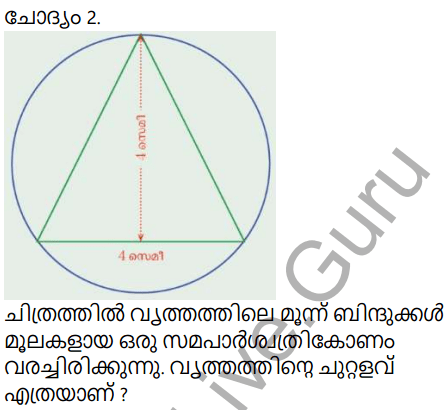
Kerala Syllabus 9th Standard Maths Solutions Chapter 9 Circle Measures in Malayalam 17
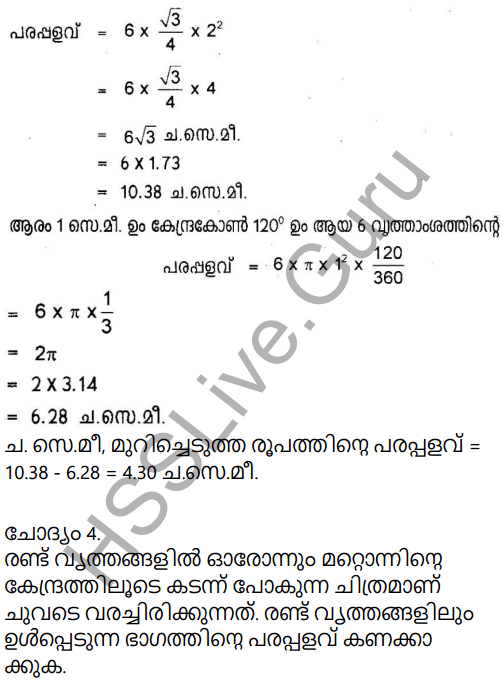
Kerala Syllabus 9th Standard Maths Solutions Chapter 9 Circle Measures in Malayalam 18
Kerala Syllabus 9th Standard Maths Solutions Chapter 9 Circle Measures in Malayalam 19
Kerala Syllabus 9th Standard Maths Solutions Chapter 9 Circle Measures in Malayalam 20
Kerala Syllabus 9th Standard Maths Solutions Chapter 9 Circle Measures in Malayalam 21
Kerala Syllabus 9th Standard Maths Solutions Chapter 9 Circle Measures in Malayalam 22
Kerala Syllabus 9th Standard Maths Solutions Chapter 9 Circle Measures in Malayalam 23

Kerala Syllabus 9th Standard Maths Solutions Chapter 9 Circle Measures in Malayalam 24
Kerala Syllabus 9th Standard Maths Solutions Chapter 9 Circle Measures in Malayalam 25
Kerala Syllabus 9th Standard Maths Solutions Chapter 9 Circle Measures in Malayalam 26
Kerala Syllabus 9th Standard Maths Solutions Chapter 9 Circle Measures in Malayalam 27
Kerala Syllabus 9th Standard Maths Solutions Chapter 9 Circle Measures in Malayalam 28
Kerala Syllabus 9th Standard Maths Solutions Chapter 9 Circle Measures in Malayalam 29
Kerala Syllabus 9th Standard Maths Solutions Chapter 9 Circle Measures in Malayalam 30

Kerala Syllabus 9th Standard Maths Solutions Chapter 9 Circle Measures in Malayalam 31
Kerala Syllabus 9th Standard Maths Solutions Chapter 9 Circle Measures in Malayalam 32
Kerala Syllabus 9th Standard Maths Solutions Chapter 9 Circle Measures in Malayalam 33
Kerala Syllabus 9th Standard Maths Solutions Chapter 9 Circle Measures in Malayalam 34
Kerala Syllabus 9th Standard Maths Solutions Chapter 9 Circle Measures in Malayalam 35

Kerala Syllabus 9th Standard Maths Solutions Chapter 9 Circle Measures in Malayalam 36
Kerala Syllabus 9th Standard Maths Solutions Chapter 9 Circle Measures in Malayalam 37
Kerala Syllabus 9th Standard Maths Solutions Chapter 9 Circle Measures in Malayalam 38
Kerala Syllabus 9th Standard Maths Solutions Chapter 9 Circle Measures in Malayalam 39
Kerala Syllabus 9th Standard Maths Solutions Chapter 9 Circle Measures in Malayalam 40

Kerala Syllabus 9th Standard Maths Solutions Chapter 9 Circle Measures in Malayalam 41
Kerala Syllabus 9th Standard Maths Solutions Chapter 9 Circle Measures in Malayalam 42
Kerala Syllabus 9th Standard Maths Solutions Chapter 9 Circle Measures in Malayalam 43
Kerala Syllabus 9th Standard Maths Solutions Chapter 9 Circle Measures in Malayalam 44
Kerala Syllabus 9th Standard Maths Solutions Chapter 9 Circle Measures in Malayalam 45
Kerala Syllabus 9th Standard Maths Solutions Chapter 9 Circle Measures in Malayalam 46
Kerala Syllabus 9th Standard Maths Solutions Chapter 9 Circle Measures in Malayalam 47

Kerala Syllabus 9th Standard Maths Solutions Chapter 9 Circle Measures in Malayalam 48
Kerala Syllabus 9th Standard Maths Solutions Chapter 9 Circle Measures in Malayalam 49
Kerala Syllabus 9th Standard Maths Solutions Chapter 9 Circle Measures in Malayalam 50
Kerala Syllabus 9th Standard Maths Solutions Chapter 9 Circle Measures in Malayalam 51
Kerala Syllabus 9th Standard Maths Solutions Chapter 9 Circle Measures in Malayalam 52
Kerala Syllabus 9th Standard Maths Solutions Chapter 9 Circle Measures in Malayalam 53
Kerala Syllabus 9th Standard Maths Solutions Chapter 9 Circle Measures in Malayalam 54

Kerala Syllabus 9th Standard Maths Solutions Chapter 9 Circle Measures in Malayalam 55
Kerala Syllabus 9th Standard Maths Solutions Chapter 9 Circle Measures in Malayalam 56
Kerala Syllabus 9th Standard Maths Solutions Chapter 9 Circle Measures in Malayalam 57
Kerala Syllabus 9th Standard Maths Solutions Chapter 9 Circle Measures in Malayalam 58
Kerala Syllabus 9th Standard Maths Solutions Chapter 9 Circle Measures in Malayalam 59
Kerala Syllabus 9th Standard Maths Solutions Chapter 9 Circle Measures in Malayalam 60

Kerala Syllabus 9th Standard Maths Solutions Chapter 9 Circle Measures in Malayalam 61
Kerala Syllabus 9th Standard Maths Solutions Chapter 9 Circle Measures in Malayalam 62
Kerala Syllabus 9th Standard Maths Solutions Chapter 9 Circle Measures in Malayalam 63
Kerala Syllabus 9th Standard Maths Solutions Chapter 9 Circle Measures in Malayalam 64

Kerala Syllabus 9th Standard Maths Solutions Chapter 9 Circle Measures in Malayalam 65
Kerala Syllabus 9th Standard Maths Solutions Chapter 9 Circle Measures in Malayalam 66
Kerala Syllabus 9th Standard Maths Solutions Chapter 9 Circle Measures in Malayalam 67
Kerala Syllabus 9th Standard Maths Solutions Chapter 9 Circle Measures in Malayalam 68

Kerala Syllabus 9th Standard Maths Solutions Chapter 9 Circle Measures in Malayalam 69
Kerala Syllabus 9th Standard Maths Solutions Chapter 9 Circle Measures in Malayalam 70
Kerala Syllabus 9th Standard Maths Solutions Chapter 9 Circle Measures in Malayalam 71
Kerala Syllabus 9th Standard Maths Solutions Chapter 9 Circle Measures in Malayalam 72

Kerala Syllabus 10th Standard Social Science Notes Chapter 3 Public Administration

Kerala State Syllabus 10th Standard Social Science Notes Chapter 3 Public Administration

Public administration is concerned with the administration of the government. In all countries, there exists administrative institutions to implement the laws and developmental projects formed by govern-ment. The history of public administration begins with the formation of state. Democratic administration becomes more effective and efficient through public administration. E-governance, Information Commission and Right to Service are the steps taken for administrative reforms. In order to make public administration more efficient and to prevent corruption, institutions like Lokpal, Lokayukta, Central Vigilance Commission and Ombudsman are formed.

→ Public administration: Public administration is the effective utilization of man and materials for the implementation of existing laws, governmental policies, programmes and developmental projects.

→ Bureaucracy : The employees who work under public administrative system and administer the country are together known as bureaucracy.

→ Union Public Service Commission : The institution that selects and recruits candidates to all India services and Central services. It functions at all India level.

→ Public Service Commissions : The institutions that function at state levels and select and recruit candidates for state services.

→ Administrative reforms : The number of steps taken by the government for increasing the efficiency of the services and to provide service to people in a time bound manner are known as administrative reforms.

→ E-governance : E-governance is the use of electronic technology in administration.

→ Right to Information: The Right to Information is the right to examine and demand copies of files, documents, circulars, orders, statistics, etc under the disposal of government institutions and institutions which receive government funds.

Social Science Short Notes For Class 10 Kerala Syllabus

→ Right to Service Act : A law which ensures service to people.

→ Lokpal: The institution constituted at the national level to prevent corruption at administrative, bureaucratic and political levels.

→ Lokayukta : The institution constituted at the state level to prevent corruption at administrative, bureaucratic and political levels.

→ Central Vigilance Commission : The institution constituted at the national level in 1964 to prevent corruption.

→ Ombudsman : Ombudsman is a system constituted for the purpose of filing complaints against the corruption, nepotism, financial misappropriation and negligence of duty of elected representatives and bureaucrats.

Kerala Syllabus 10th Standard Social Science Notes

Kerala Syllabus 8th Standard Basic Science Solutions Chapter 4 Properties of Matter in Malayalam

Students can Download Basic Science Chapter 4 Properties of Matter Questions and Answers, Notes Pdf, Activity in Malayalam Medium, Kerala Syllabus 8th Standard Basic Science Solutions helps you to revise the complete Kerala State Syllabus and score more marks in your examinations.

Kerala State Syllabus 8th Standard Basic Science Solutions Chapter 4 Properties of Matter in Malayalam

Properties of Matter Text Book Questions and Answers

Kerala Syllabus 8th Standard Biology Notes

Kerala Syllabus 8th Standard Biology Notes Malayalam Medium
Kerala Syllabus 8th Standard Chemistry Notes Malayalam Medium
Kerala Syllabus 8th Standard Physics Notes Pdf

Class 7 Basic Science Chapter 4 Kerala Syllabus
Properties Of Matter Class 8 Notes Pdf Kerala Syllabus
Kerala Syllabus 8th Standard Notes

Kerala Syllabus 8th Standard Chemistry Notes
Kerala Syllabus 8th Standard Physics Notes
Basic Science Class 8 Chapter 4 Kerala Syllabus

Basic Science Class 8 Chapter 11 Kerala Syllabus
Class 8 Science Notes Kerala Syllabus
8th Class Biology Notes Pdf Kerala Syllabus
Kerala Syllabus 8th Standard Basic Science Notes

Std 8 Chemistry Notes Kerala Syllabus
8th Standard Chemistry Notes Kerala Syllabus
Basic Science For Class 8 Chapter 4 Kerala Syllabus
Kerala State Class 8 Malayalam Chapter 1 Notes

Kerala Syllabus 8th Standard Science Notes
8th Standard Chemistry Kerala Syllabus
Kerala Syllabus 8th Standard Basic Science Solutions Chapter 4 Properties of Matter in Malayalam 21
Kerala Syllabus 8th Standard Basic Science Solutions Chapter 4 Properties of Matter in Malayalam 22

Kerala Syllabus 8th Standard Basic Science Solutions Chapter 4 Properties of Matter in Malayalam 23
Kerala Syllabus 8th Standard Basic Science Solutions Chapter 4 Properties of Matter in Malayalam 24
Kerala Syllabus 8th Standard Basic Science Solutions Chapter 4 Properties of Matter in Malayalam 25
Kerala Syllabus 8th Standard Basic Science Solutions Chapter 4 Properties of Matter in Malayalam 26

Kerala Syllabus 8th Standard Basic Science Solutions Chapter 4 Properties of Matter in Malayalam 27
Kerala Syllabus 8th Standard Basic Science Solutions Chapter 4 Properties of Matter in Malayalam 28
Kerala Syllabus 8th Standard Basic Science Solutions Chapter 4 Properties of Matter in Malayalam 29
Kerala Syllabus 8th Standard Basic Science Solutions Chapter 4 Properties of Matter in Malayalam 30

Kerala Syllabus 8th Standard Basic Science Solutions Chapter 4 Properties of Matter in Malayalam 31
Kerala Syllabus 8th Standard Basic Science Solutions Chapter 4 Properties of Matter in Malayalam 32
Kerala Syllabus 8th Standard Basic Science Solutions Chapter 4 Properties of Matter in Malayalam 33
Kerala Syllabus 8th Standard Basic Science Solutions Chapter 4 Properties of Matter in Malayalam 34

Kerala Syllabus 8th Standard Basic Science Solutions Chapter 4 Properties of Matter in Malayalam 35
Kerala Syllabus 8th Standard Basic Science Solutions Chapter 4 Properties of Matter in Malayalam 36
Kerala Syllabus 8th Standard Basic Science Solutions Chapter 4 Properties of Matter in Malayalam 37
Kerala Syllabus 8th Standard Basic Science Solutions Chapter 4 Properties of Matter in Malayalam 38